
OUR FARM STORY · DOOR COUNTY, WISCONSIN
Growing Hemp in Door County: The Gray-Aire Farms Story
Door County Cannabis Co. did not begin as a product idea. It began in a farm field. Gray-Aire Farms’ move into hemp in 2019 became an experiment in crop diversification, sustainable agriculture, Midwest growing conditions, and what a new crop could mean for a family farm in Door County.
OUR STORY IN BRIEF
From Dairy Ground to a New Wisconsin Crop
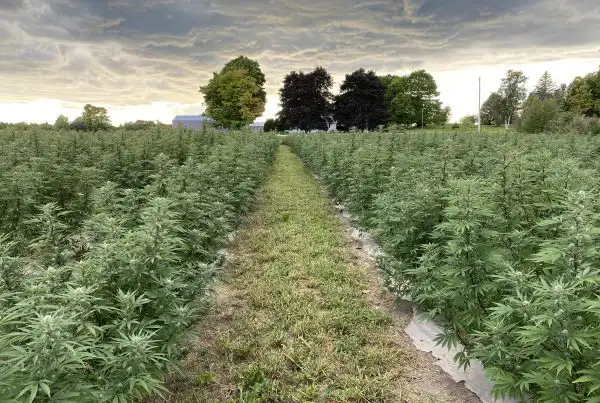
Gray-Aire Farms has agricultural roots reaching back to the early 1900s. In 2019, we planted our first hemp crop in Door County. That first season grew into larger-scale cultivation in 2020 and research collaboration in 2021—and ultimately helped form the agricultural foundation behind Door County Cannabis Co.
A Farm Looking for What Came Next
Gray-Aire Farms has roots in Door County agriculture stretching back generations. Like many farms, the land changed as agriculture, markets, and opportunities changed around it.
Hemp presented something different: a newly legal crop, an unfamiliar production system, and an opportunity to explore whether Door County farmland could support a crop that was only beginning to develop a commercial identity in the Midwest.
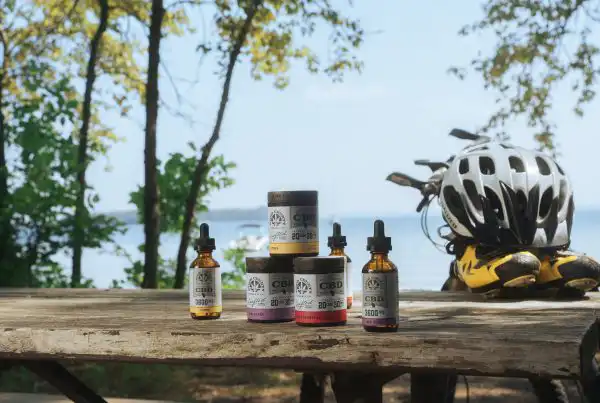
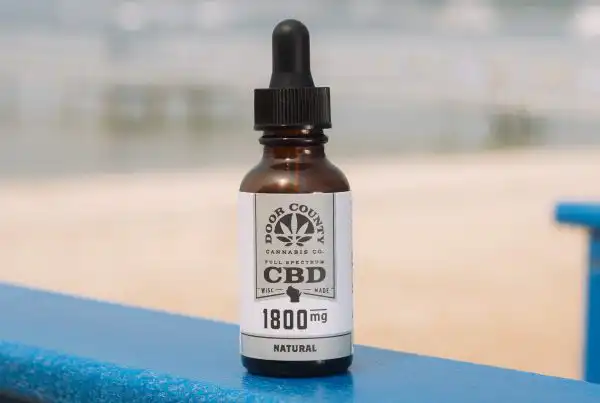
Door County Cannabis Co. was founded in 2019 from that effort to diversify Gray-Aire Farms through hemp cultivation. What began in the field eventually became a consumer hemp brand built around the same crop.
Three Growing Seasons That Shaped the Business
2019 · THE FIRST CROP
Learning Hemp in Door County
Our first hemp season began in 2019 with the Abacus cultivar. Hemp was unfamiliar territory compared with the crops traditionally seen across the area, and the first year became an exercise in learning planting, field management, harvest timing, drying, processing, and cannabinoid production under Door County conditions.
Our records from that season show a harvest of approximately 2,320 pounds of processed hemp flower and leaves.
More important than the number was what the harvest proved to us: hemp could be grown here, and the crop could become the agricultural starting point for something larger.
2020 · EXPANSION
Roughly Three Acres and 8,000 Plants
The second season moved beyond the small-scale experiment. Gray-Aire Farms expanded hemp production to approximately three acres and planted roughly 8,000 plants.
We incorporated biodegradable paper mulch and used a specialized transplanter to improve planting efficiency. Those decisions reflected what we were learning: hemp production was not simply about growing a different plant. It required developing an entirely different production system.
That season also reinforced the value of adapting equipment, field practices, and materials instead of assuming that methods used for traditional crops would transfer directly to hemp.
2021 · RESEARCH & COLLABORATION
Becoming Part of a Midwest Learning Network
By 2021, hemp growers across the Midwest were still answering basic agronomic questions about cultivar performance, flowering, harvest timing, cannabinoid development, and regional growing conditions.
Gray-Aire Farms dedicated approximately 0.75 acre that season to work connected with the Midwestern Hemp Database, contributing our farm experience to a larger effort to build useful production data for Midwest growers.
MIDWESTERN HEMP DATABASE
Farmers Helping Build the Research Base
The Midwestern Hemp Database was built around collaboration between growers, university researchers, and laboratories. Growers contributed field samples and production information so researchers could better understand cannabinoid development and cultivar performance across Midwest conditions.
Illinois Extension reports that more than 180 grower-collaborators ultimately submitted samples to the project. Participating institutions included the University of Illinois, University of Wisconsin–Madison, Michigan State University, and Purdue University.
Why the Research Mattered
Hemp entered Midwest agriculture with far less region-specific production information than long-established crops.
The Midwestern Hemp Database was designed to close part of that gap by combining information from real farms with university research. Illinois Extension describes the project as a way to produce regional insight into agronomic performance and cannabinoid development while making results available to growers and the public. [2]
Research from the project examined issues such as cultivar performance, flowering time, biomass yield, cannabinoid production, harvest timing, and compliance. [3]
Sustainability Had to Work in the Field
Sustainability can become an easy marketing word. On a farm, it has to translate into actual production decisions.
Our hemp seasons included experiments with biodegradable paper mulch, existing farm resources, equipment adaptation, and ways to improve planting efficiency while reducing reliance on conventional plastic mulch.
Not every experiment becomes a permanent practice. That is part of farming. Each season gives you information that changes what you do the next time.
From a Hemp Crop to Door County Cannabis Co.
The farm came before the products.
Door County Cannabis Co. began in 2019 with the goal of using hemp as a new form of agricultural diversification at Gray-Aire Farms. That origin continues to influence how we think about sourcing, testing, packaging, consumer education, and the identity of the brand.
We did not enter hemp because gummies or tinctures were already established categories for us. We entered because we were growing the crop and trying to understand what could be built from it.
What Hemp Farming Taught Us
The Farm Story Looks Different in 2026
The hemp industry has changed dramatically since our first crop in 2019.
Regulations changed. Consumer products changed. Cannabinoid markets changed. The economics of the crop changed.
What has not changed is where Door County Cannabis Co. started: with a Wisconsin farm willing to try a new crop and learn what could come from it.
That history matters even as the federal hemp landscape changes again. It explains why we care about what happens to independent hemp farms and businesses next.
FROM GRAY-AIRE FARMS TO DOOR COUNTY CANNABIS CO.
The Products Came After the Crop.
Door County Cannabis Co. began with a simple agricultural question: could hemp become a meaningful new crop for our Door County farm?
What followed became years of growing, learning, testing, developing products, working with customers, and navigating an industry that never stopped changing.
Sources & Further Reading
- Door County Cannabis Co. Gray-Aire Farms cultivation records and previously published farm history covering the 2019–2021 hemp growing seasons. View original farm history .
- University of Illinois Extension. Cannabinoid Hemp Database — Midwestern Hemp Database. Explore the project .
- University of Illinois Extension. Farmers, Researchers Break Ground With New Guidelines for Budding Hemp Crop. Read the research summary .
- University of Illinois Extension. Refining and Expanding Hemp Database. Read the project history .
Farm-specific acreage, plant counts, harvest figures, cultivars, and cultivation history in this article are based on Gray-Aire Farms and Door County Cannabis Co. records. External university sources are provided for context on the Midwestern Hemp Database and regional hemp research program.