FEDERAL HEMP LAW · 2026
Is CBD Being Banned in 2026?
Not exactly. CBD itself is not specifically banned by the federal hemp law scheduled to take effect November 12, 2026. Instead, Congress changed the federal definition of hemp in a way that could cause many products currently sold as legal hemp—including some full-spectrum CBD products—to fall outside that definition. Proposals to delay or revise the new framework remain under consideration.
The biggest change for finished hemp-derived cannabinoid products is a new threshold based on the entire container: more than 0.4 milligrams of certain THC and THC-like cannabinoids per container can cause a finished product to fall outside the federal definition of hemp.
That is a major departure from the framework consumers and hemp businesses have operated under since the 2018 Farm Bill.
Is CBD being banned on November 12, 2026?
No. The new federal law does not specifically ban cannabidiol (CBD). Instead, it changes which cannabis products qualify as federally legal hemp.
The important distinction is that the law changes the definition of hemp. It does not simply declare all CBD illegal.
THE LAW
What Actually Changes on November 12, 2026?
The 2018 Farm Bill created the federal framework that separated hemp from marijuana primarily through a concentration threshold: cannabis containing no more than 0.3% delta-9 THC on a dry-weight basis could qualify as hemp.
The new federal definition is more restrictive. For finished hemp-derived cannabinoid products, it introduces a limit based on the amount of certain cannabinoids contained in the entire finished container.
Under the new federal definition, a finished hemp-derived cannabinoid product containing more than 0.4 mg combined total of specified THC and THC-like cannabinoids per container can fall outside the definition of hemp.
The law also addresses other parts of the hemp market, including certain synthesized or manufactured cannabinoids and intermediate hemp-derived cannabinoid products.
For consumers, however, the per-container rule is one of the most important changes to understand.
WHY IT MATTERS
Why the 0.4 mg Per-Container Rule Is Such a Big Change
The old and new thresholds measure different things.
0.3% Delta-9 THC
Compliance has largely centered on delta-9 THC concentration measured on a dry-weight basis.
0.4 mg Per Container
Finished hemp-derived cannabinoid products face an additional threshold based on specified cannabinoids in the entire container.
That difference becomes especially important for products containing multiple servings.
A package containing ten gummies with 5 mg of THC in each gummy contains:
The new finished-product threshold is 0.4 mg per container—not 0.4 mg per serving.
This is why the change reaches far beyond products traditionally considered “high potency.” Even relatively small amounts of THC can add up across an entire bottle, bag, or package.
CBD PRODUCTS
What Does This Mean for CBD?
The answer depends on the product.
CBD and THC are different cannabinoids. A product containing CBD does not automatically contain enough THC to exceed the new threshold. But many CBD products—especially full-spectrum CBD—intentionally preserve a broader range of compounds naturally found in hemp, including small amounts of THC.
FULL SPECTRUM
Why Full-Spectrum CBD Deserves Special Attention
Full-spectrum CBD is designed to retain a range of naturally occurring hemp compounds rather than isolating CBD alone. Depending on the formulation, that can include trace amounts of THC.
Under the current framework, a full-spectrum product may comply with the federal hemp definition while containing those trace amounts. Under the 2026 framework, manufacturers and consumers also have to consider how much of the covered cannabinoids are present across the entire finished container.
That creates an important question:
How much covered THC is actually in the entire bottle, bag or package?
The answer should come from product-specific laboratory testing—not assumptions based on the words “full spectrum.”
This issue is important enough that we are covering it separately in our guide to full-spectrum CBD and the 2026 hemp law.
FOR CONSUMERS
How to Evaluate a CBD Product
The changing law makes product transparency even more important. Whether you are purchasing CBD now or evaluating products after the new definition takes effect, a few basic checks can tell you considerably more than the front of the package.
Find the Certificate of Analysis
A current COA provides laboratory results for the specific product or batch and can show which cannabinoids were detected.
Match the COA to the Product
Check the batch or lot information rather than relying on an unrelated laboratory report.
Look Beyond CBD
For full-spectrum products, review the THC-related cannabinoid results rather than looking only at the amount of CBD.
Consider the Entire Container
Under the new framework, container size matters. The relevant question may be the total amount across the complete bottle or package—not simply one serving.
Our guide to reading a Certificate of Analysis explains how to interpret these laboratory reports in more detail.
OUR PERSPECTIVE
What This Means to a Wisconsin Hemp Company
For Door County Cannabis Co., hemp has never been an abstract category on a product label.
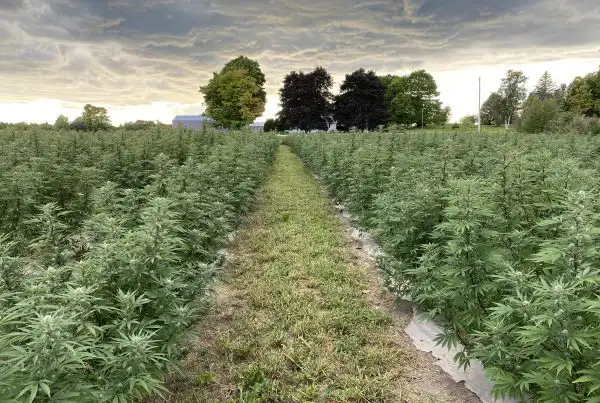
Our story grew from Gray-Aire Farms in Door County, where we planted our first hemp crop in 2019 after the 2018 Farm Bill created a new opportunity for American agriculture. We grew hemp here in Wisconsin, learned the crop firsthand and built Door County Cannabis Co. around that agricultural foundation.
The 2026 federal change therefore represents more than another regulatory update. It changes the framework that helped small farms and hemp businesses like ours enter this industry in the first place.
We believe consumers deserve a clear explanation of what is changing without exaggerating it in either direction. CBD has not simply been “banned.” At the same time, the new definition could significantly restrict products that have been legally sold under the existing federal hemp framework.
Read our Gray-Aire Farms hemp story →FREQUENTLY ASKED QUESTIONS
CBD & the 2026 Hemp Law: FAQ
Is CBD being banned in 2026?
No. The federal change does not specifically prohibit CBD. It changes the definition of hemp and creates new restrictions that can affect finished hemp-derived cannabinoid products, including some CBD products.
When does the new hemp law take effect?
The enacted changes to the federal hemp definition are scheduled to take effect on November 12, 2026.
Will full-spectrum CBD still be legal?
It depends on the finished product's cannabinoid content and how the applicable federal requirements are implemented. Full-spectrum CBD can contain naturally occurring THC, so product-specific laboratory results and total cannabinoid content per container become particularly important.
What does 0.4 mg per container mean?
The new federal definition includes a threshold based on the combined total of specified THC and THC-like cannabinoids in an entire finished container. It is not simply a 0.4 mg limit per serving.
Does this replace the 0.3% hemp limit?
No. The new law restructures and adds requirements to the federal definition of hemp rather than simply replacing every existing THC measurement with 0.4 mg.
Could the law change before November 12?
Yes. Congress can amend federal law before the scheduled effective date. This article reflects enacted federal law as of the update date shown above and will be updated if the legal framework changes.
Are CBD laws the same in every state?
No. Federal hemp law is only one part of the regulatory landscape. States can impose additional requirements or restrictions on hemp-derived products.
STAY INFORMED
The Hemp Story Is Still Being Written
Federal hemp policy continues to evolve. We are following the legislation, reviewing what it means for our products and updating our guides as the legal landscape changes.
Sources & Further Reading
- Congressional Research Service. Changes to the Federal Definition of Hemp: Legal and Policy Considerations. View CRS legal analysis .
- U.S. Congress. Public Law 119-37 — Amendments affecting the federal definition of hemp. View enacted legislation .
- U.S. Food and Drug Administration. FDA Regulation of Cannabis and Cannabis-Derived Products, Including Cannabidiol (CBD). View FDA guidance .
This article is provided for general educational purposes and is not legal advice. Federal and state laws can change. The information above reflects the legal landscape as of August 13, 2026 and should be reviewed again if Congress or federal agencies modify the scheduled November 12, 2026 framework.