
WISCONSIN CBD LAW · UPDATED SEPTEMBER 2026
Is CBD Legal in Wisconsin? 2026 Guide
Yes. Hemp-derived CBD is currently legal in Wisconsin when the product qualifies as hemp under applicable state and federal law. However, major changes to the federal definition of hemp are approaching, and those changes could affect which CBD and other hemp-derived products remain federally legal.
CURRENT STATUS · SEPTEMBER 2026
Is CBD Legal in Wisconsin Right Now?
Yes. Wisconsin permits hemp and hemp-derived products that meet the applicable legal definition of hemp. Consumers do not need a Wisconsin medical-marijuana card to purchase ordinary hemp-derived CBD products.
Wisconsin's hemp framework follows federal law, meaning the legal status of a product depends in part on whether it qualifies as hemp under applicable state and federal standards. [1]
How Did CBD Become Legal in Wisconsin?
Wisconsin's CBD rules developed in stages.
Early Wisconsin laws created narrow access to cannabidiol products for medical purposes. The legal landscape changed much more substantially after Congress enacted the 2018 Farm Bill, which removed qualifying hemp from the federal Controlled Substances Act definition of marijuana.
Wisconsin followed with 2019 Wisconsin Act 68. The law modified Wisconsin's definition of hemp to align with federal law and expressly stated that Wisconsin's hemp laws should not be construed to limit access to CBD products. [1]
2014–2017
Early CBD Access
Wisconsin created limited statutory pathways involving cannabidiol before broad federal hemp legalization.
2018
Federal Hemp Legalization
The 2018 Farm Bill removed qualifying hemp from the federal Controlled Substances Act definition of marijuana.
2019
Wisconsin Act 68
Wisconsin aligned its hemp framework with federal law and established additional state hemp provisions.
2022
USDA Takes Over Grower Licensing
Wisconsin discontinued its own hemp licensing program. Growers in Wisconsin now obtain hemp-production licenses through USDA.
2026
Federal Definition Changes Again
A narrower federal hemp definition is scheduled to take effect November 12, 2026.
What Makes a CBD Product Legal in Wisconsin Today?
CBD itself does not determine whether a cannabis product is legally classified as hemp.
The important question is whether the underlying cannabis material or product meets the legal definition of hemp.
Under the federal framework currently in effect, hemp is generally distinguished from marijuana using a Delta-9 THC concentration limit of no more than 0.3% on a dry-weight basis. [2]
Do You Need a Medical Card to Buy CBD in Wisconsin?
No medical-marijuana card is required to purchase ordinary hemp-derived CBD products that qualify as hemp.
Wisconsin does have older statutory provisions involving physician certification for certain cannabidiol products. But Wisconsin law separately states that certification is not required to possess hemp as defined under state hemp law. [3]
IMPORTANT DISTINCTION
Wisconsin's older medical-CBD statutes and today's general hemp-derived CBD market are not the same legal pathway. A consumer purchasing a qualifying hemp-derived CBD tincture, balm, or other hemp product does not need to obtain a Wisconsin medical-marijuana card.
What Types of CBD Products Are Available in Wisconsin?
CBD is sold in several product formats across Wisconsin.
Is Full-Spectrum CBD Legal in Wisconsin?
Yes, full-spectrum CBD can currently qualify as legal hemp in Wisconsin when it meets applicable state and federal requirements.
Unlike CBD isolate, full-spectrum CBD retains a broader range of naturally occurring hemp compounds and may contain trace amounts of THC. That matters because federal law distinguishes hemp from marijuana based on specific legal standards for cannabinoids and THC.
A major change to the federal definition of hemp is scheduled to take effect November 12, 2026. The new standards could cause some full-spectrum CBD products that qualify as hemp today to fall outside the federal definition after the change takes effect. Proposals to delay or revise the new framework are still being considered.
Can You Buy CBD Online in Wisconsin?
Hemp-derived CBD products are currently sold online and shipped to Wisconsin consumers, subject to the applicable federal and state requirements.
Buying online does not eliminate the need to evaluate the product.
Before purchasing, look for:
Where Can You Buy CBD in Wisconsin?
CBD products are currently available through online sellers, specialty hemp retailers, and other Wisconsin stores.
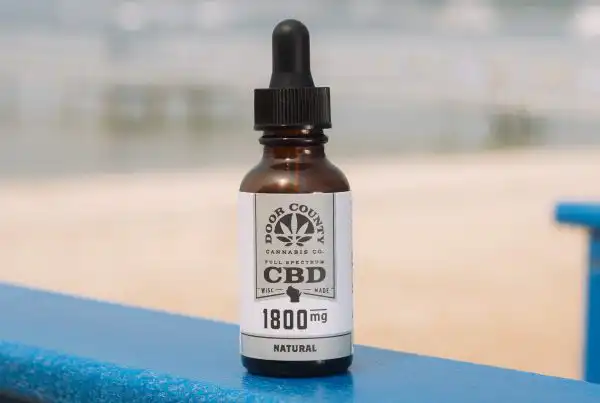
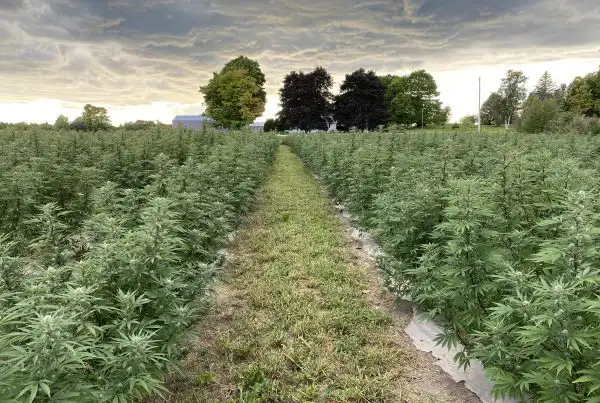
Door County Cannabis Co. began as a Wisconsin hemp business connected to Gray-Aire Farms in Door County. Our products have been sold online and through selected local retail partners.
How Old Do You Have to Be to Buy CBD in Wisconsin?
Wisconsin does not have one simple statewide age rule that applies identically to every possible hemp-derived CBD product format.
Retailer policies can be stricter than minimum legal requirements, and certain cannabinoid products or product formats can be subject to additional rules.
Consumers should therefore check the requirements of the specific retailer and product rather than assuming that every CBD item follows the same age standard.
WHY WE DO NOT GIVE A SINGLE AGE NUMBER HERE
“CBD” covers multiple product categories. A general CBD tincture, a hemp-derived intoxicating product, and a hemp vaping device can be regulated differently. We would rather give the accurate answer than turn a retailer policy into a statewide legal rule.
Are CBD or Hemp Vapes Treated Differently in Wisconsin?
Yes. Wisconsin has adopted a separate directory requirement for electronic vaping devices.
Beginning July 2, 2026, a hemp electronic vaping device that is not properly listed in the Wisconsin Department of Revenue directory cannot be sold or offered for sale in Wisconsin. [4]
The certification process includes laboratory documentation showing that the device contains hemp and does not contain nicotine. [4]
This is a good example of why “CBD is legal” does not mean every product format follows exactly the same rules.
Can Full-Spectrum CBD Matter for Driving or Drug Testing?
It can.
CBD itself is not generally considered intoxicating. But full-spectrum CBD can contain trace THC.
Wisconsin has historically maintained strict rules concerning THC and driving, and THC exposure can also matter for workplace or other drug testing.
If avoiding THC is important to you, do not rely only on the word “CBD.” Review the product's current laboratory results.
PRODUCT LABELS ARE NOT ENOUGH
“Full-spectrum CBD” and “THC-free” do not mean the same thing. A current Certificate of Analysis is the better source for understanding what cannabinoids were actually detected.
What Changes for CBD on November 12, 2026?
CBD is not simply being banned. But the federal definition of hemp is scheduled to become significantly narrower on November 12, 2026, and that could affect many CBD products that are legally sold as hemp today.
Congress enacted the new definition in November 2025. Among other changes, the law shifts the federal standard for hemp plants from Delta-9 THC alone to total THC and creates new exclusions for finished hemp-derived cannabinoid products. [5]
One of the most consequential provisions excludes a finished hemp-derived cannabinoid product if the entire container contains more than 0.4 milligrams combined total of THC and certain cannabinoids with similar effects. [5]
NEW FINISHED-PRODUCT THRESHOLD
The threshold applies to the entire finished container — not to each serving.
That matters for CBD because full-spectrum products can contain small, naturally occurring amounts of THC. Congressional Research Service analysis notes that some full-spectrum CBD products may exceed the new per-container threshold even though they qualify as hemp under current law. [6]
Unless Congress changes the law before the effective date, some CBD products currently available in Wisconsin may therefore need to be reformulated, removed from the hemp market, or otherwise brought into compliance with the new federal definition.
What Does the Federal Change Mean for Wisconsin?
Wisconsin's hemp framework has historically been tied closely to federal hemp law.
More importantly, even if a state allows a cannabis-derived product under state law, state law cannot make that product qualify as federally exempt hemp when it falls outside the federal definition.
CRS explains that products excluded from the new federal hemp definition are instead subject to federal Controlled Substances Act treatment as marijuana when the amendment takes effect. [6]
Wisconsin officials have already raised concerns about the effect. In March 2026, Gov. Tony Evers urged Wisconsin's congressional delegation to modify the new federal hemp law, citing an estimated $700 million in Wisconsin economic impact and nearly 3,500 jobs potentially affected. [7]
A WISCONSIN HEMP BUSINESS
Why We Pay Close Attention to Wisconsin CBD Law
Door County Cannabis Co. began in 2019 through our work growing hemp at Gray-Aire Farms in Door County.
That means changes to hemp law are not abstract to us. They affect the products we can make, how we test and label them, whether retailers can carry them, and whether customers can continue purchasing products they have used for years.
Our approach is simple: distinguish what the law says today from what is scheduled to change, rely on primary sources where possible, and update these pages when the legal landscape changes.
Frequently Asked Questions
Is CBD legal in Wisconsin in 2026?
Yes. Hemp-derived CBD products that meet applicable state and federal requirements are currently legal in Wisconsin. Federal hemp law is scheduled to change later in 2026, which could affect which finished CBD products continue to qualify as hemp.
Do I need a medical card to buy CBD in Wisconsin?
No. A medical-marijuana card is not required to purchase ordinary hemp-derived CBD products that legally qualify as hemp.
Are CBD gummies legal in Wisconsin?
Yes. Hemp-derived CBD gummies can currently be sold in Wisconsin when they comply with applicable hemp and product requirements. As with other finished CBD products, their cannabinoid content and formulation determine whether they qualify as hemp.
Is CBD oil legal in Wisconsin?
Yes. Hemp-derived CBD oils and tinctures can currently be sold and possessed in Wisconsin when they meet applicable hemp and product requirements.
Is full-spectrum CBD legal in Wisconsin?
Full-spectrum CBD can currently qualify as legal hemp. Because full-spectrum products may contain naturally occurring trace amounts of THC, they could be particularly affected by the scheduled changes to the federal definition of hemp.
Can I buy CBD online and have it shipped to Wisconsin?
Yes. Qualifying hemp-derived CBD products can currently be purchased online and shipped to Wisconsin. Consumers should still consider product compliance, cannabinoid content, laboratory testing, and applicable laws when choosing a product.
How old do you have to be to buy CBD in Wisconsin?
Wisconsin does not have one simple age requirement that applies identically to every CBD product and situation. Age restrictions can depend on the product, retailer policy, and other applicable requirements.
Is marijuana legal in Wisconsin?
No. Wisconsin has not broadly legalized adult-use marijuana statewide. Hemp and marijuana are legally distinct categories, which is why qualifying hemp-derived CBD products can be legal even though recreational marijuana is not.
Will CBD become illegal when the federal hemp law changes?
Not necessarily. The federal change does not simply ban CBD. However, the new definition of hemp could exclude some finished CBD products that qualify as hemp today, particularly full-spectrum products containing THC above the new statutory limits. CBD products formulated to comply with the new standards may still remain available.
Sources & Further Reading
- State of Wisconsin. 2019 Wisconsin Act 68 — Wisconsin hemp law and alignment with the federal hemp framework. View Wisconsin summary .
- Wisconsin Department of Justice. Controlled Substances — Hemp and Marijuana. View Wisconsin DOJ guidance .
- Wisconsin Statutes § 961.32. Possession authorization and hemp-related CBD provisions. View statute text .
- Wisconsin Department of Revenue. Electronic Vaping Device Directory — Hemp Device Requirements. View Wisconsin vape requirements .
- U.S. Congress. Public Law 119-37, Section 781 — Changes to the Federal Definition of Hemp. View federal legislation .
- Congressional Research Service. Changes to the Federal Definition of Hemp: Legal Considerations Under the Controlled Substances Act. View CRS legal analysis .
- Office of Governor Tony Evers. March 3, 2026 letter urging changes to the new federal hemp law. View Wisconsin announcement .
- Wisconsin Department of Agriculture, Trade and Consumer Protection. Wisconsin Hemp Resources. View current Wisconsin hemp program information .
This article is provided for general educational purposes and is not legal advice. Hemp, CBD, food, vaping, controlled-substance, and other product rules can differ by product and can change. This page reflects the legal landscape reviewed as of August 13, 2026.