
CBD GUIDE · UPDATED AUGUST 2026
What Is CBD? Understanding Cannabidiol & Mindful Use
CBD has become one of the most familiar compounds associated with hemp, but familiarity does not always mean understanding. Here is what CBD is, how it differs from THC, what we know about how it interacts with the body, and what to consider before adding a CBD product to your routine.
QUICK ANSWER
What Is CBD?
Cannabidiol, better known as CBD, is one of many naturally occurring cannabinoids found in Cannabis sativa. CBD itself is not considered intoxicating in the way Delta-9 THC is, although it can affect the brain and body. It is commonly extracted from hemp and used in products such as tinctures, gummies, capsules, and topicals.[1][2]
What Is CBD?
Cannabidiol, or CBD, is a naturally occurring cannabinoid found in the Cannabis sativa plant. Hemp is cannabis that meets the applicable federal definition of hemp, and hemp plants can contain CBD along with other cannabinoids, terpenes, and naturally occurring plant compounds.
CBD and Delta-9 THC are chemically related cannabinoids, but their pharmacological effects differ substantially. CBD itself is generally not considered intoxicating and does not produce the characteristic high associated with Delta-9 THC.[1][2]
That distinction helped make hemp-derived CBD one of the most widely recognized cannabinoid products in the United States.
CBD vs. THC: What Is the Difference?
CBD and THC both originate in cannabis, but they should not be treated as interchangeable.
| Question | CBD | Delta-9 THC |
|---|---|---|
| Found naturally in cannabis? | Yes | Yes |
| Intoxicating? | CBD itself is generally considered non-intoxicating | Yes |
| Acts primarily like THC at CB1 receptors? | No | Yes |
| Available in hemp-derived products? | Yes | Yes, subject to applicable federal and state requirements |
| FDA-approved as a drug? | One purified prescription CBD drug has FDA approval for specific seizure disorders | Not as the cannabis plant itself |
FDA has approved one prescription drug containing purified CBD for specific seizure disorders. That approval should not be interpreted as FDA approval of over-the-counter CBD oils, gummies, tinctures, or other consumer CBD products.[3]
What Is the Endocannabinoid System?
The endocannabinoid system, or ECS, is a biological signaling system involving naturally produced endocannabinoids, cannabinoid receptors, and enzymes involved in their production and breakdown.
Researchers have connected the ECS with the regulation of numerous physiological processes. But describing CBD as simply “activating” the endocannabinoid system is an oversimplification.
CBD has complex pharmacology. Research indicates that its actions can involve cannabinoid signaling as well as numerous receptors, ion channels, enzymes, and other molecular targets outside the classic CB1 and CB2 cannabinoid receptors.[4][5]
A USEFUL DISTINCTION
THC and CBD are both cannabinoids, but they do not interact with the body in the same way. CBD's mechanisms are complex, and research into many of its biological effects and potential applications is still developing.
Why Do People Use CBD?
CBD is marketed in the consumer wellness market for many different reasons. You will see products associated with sleep, stress, recovery, relaxation, discomfort, and general wellness.
Marketing claims, however, should not be confused with established medical evidence.
Outside of the FDA-approved prescription CBD drug used for certain seizure disorders, FDA has not approved consumer CBD products to diagnose, treat, cure, or prevent disease. Research into other potential applications continues, but evidence varies considerably by condition, dose, formulation, and study design.[1][3]
For us, “mindful use” therefore means approaching CBD without promising more than the evidence supports: understand what is in the product, consider why you are using it, pay attention to your individual response, and discuss relevant health or medication questions with a qualified healthcare professional.
Common Types of CBD Products
CBD can be formulated into many types of consumer products. The format affects how the product is used and can influence how CBD is absorbed.
Tinctures & Oils
Liquid formulations that allow consumers to measure different serving amounts.
Gummies & Edibles
Pre-portioned ingestible products. Oral CBD must pass through the digestive system, and absorption can vary.
Topicals
Products such as balms, creams, and lotions that are applied externally to the skin.
Capsules
Pre-measured oral formulations that provide a consistent amount per capsule.
Full-Spectrum vs. Broad-Spectrum vs. CBD Isolate
“CBD product” can describe products with very different cannabinoid profiles. One of the most useful distinctions is whether the formulation is full-spectrum, broad-spectrum, or CBD isolate.
Door County Cannabis Co.'s traditional CBD products use full-spectrum hemp extract. That means understanding the distinction between “CBD” and “THC-free” is important: full-spectrum CBD products can contain THC.
Does CBD Have Side Effects?
CBD should not be described as risk-free simply because it is hemp-derived or non-intoxicating.
FDA has identified safety concerns associated with CBD, including potential liver injury, changes in alertness, and interactions with medications. CBD can affect how other medicines work, and other medicines can affect CBD.[1]
FDA also advises against using CBD during pregnancy or while breastfeeding because significant questions remain about potential effects and safety.[6]
TALK WITH A HEALTHCARE PROFESSIONAL
- If you take prescription or other medications.
- If you have concerns about liver health or other medical conditions.
- If you are pregnant, planning to become pregnant, or breastfeeding.
- If you are considering CBD for a diagnosed medical condition.
- If you experience unexpected or concerning effects after using CBD.
How Much CBD Should You Take?
There is no single evidence-based serving amount appropriate for every consumer CBD product or every person.
CBD products vary in concentration, formulation, route of administration, and cannabinoid profile. Individual factors and concurrent medications can also matter.
Instead of treating a universal online “CBD dosage” as medical guidance, first read the product label carefully and understand how many milligrams of CBD are present per serving. If you have medical questions or take medications, discuss CBD with a healthcare professional.
Why Third-Party Testing Matters
The number printed on the front of a CBD bottle does not tell you everything about the product.
A Certificate of Analysis, or COA, can show what a laboratory measured in a particular sample or batch. Depending on the testing performed, that can include CBD, THC, other cannabinoids, and contaminant panels.
The COA should correspond to the actual batch or lot you purchased. Consumers should also check which tests were performed rather than assuming that every laboratory report represents comprehensive testing.
Is CBD Legal?
The legal answer is more complicated than simply saying “CBD is federally legal.”
The 2018 Farm Bill removed qualifying hemp from the federal Controlled Substances Act definition of marijuana, but it did not remove FDA's authority over products containing CBD and other cannabis-derived compounds.[3]
Federal hemp law is also changing again. Legislation enacted on November 12, 2025 changes the federal definition of hemp effective November 12, 2026. Among other changes, the new law uses a total-THC standard and excludes final hemp-derived cannabinoid products containing more than 0.4 milligrams of specified THC-related cannabinoids per container from the federal definition of hemp.[7]
That matters even for some products marketed primarily as CBD because full-spectrum hemp extracts can contain naturally occurring THC. State and local requirements can add another layer of regulation.
A More Mindful Way to Approach CBD
Mindful CBD use does not require treating CBD as a cure-all. It means knowing what you are buying and making an informed decision about whether it belongs in your routine.
Frequently Asked Questions
Does CBD get you high?
CBD itself is generally considered non-intoxicating and does not produce the characteristic high associated with Delta-9 THC. However, full-spectrum CBD products can contain THC, so consumers should check the product's cannabinoid profile and laboratory results.[2]
Is CBD the same as hemp oil?
Not necessarily. “Hemp oil” can refer to different hemp-derived oils. Hemp seed oil, for example, is produced from hemp seeds and should not automatically be assumed to contain meaningful concentrations of CBD. Read the ingredient list and cannabinoid information rather than relying on the word “hemp.”
Can full-spectrum CBD contain THC?
Yes. Full-spectrum hemp extracts can contain naturally occurring THC along with CBD and other hemp compounds. Check the product's current COA for the actual reported cannabinoid concentrations.
Can CBD interact with medications?
Yes. FDA identifies drug interactions as an important CBD safety concern. If you take medications, discussing CBD with a healthcare professional is appropriate.[1]
Has FDA approved CBD?
FDA has approved one prescription drug containing purified CBD for certain seizure disorders. That does not mean ordinary consumer CBD oils, gummies, tinctures, or topicals are FDA-approved treatments.[3]
GROWN FROM EXPERIENCE
Our Relationship With CBD Started in the Field.
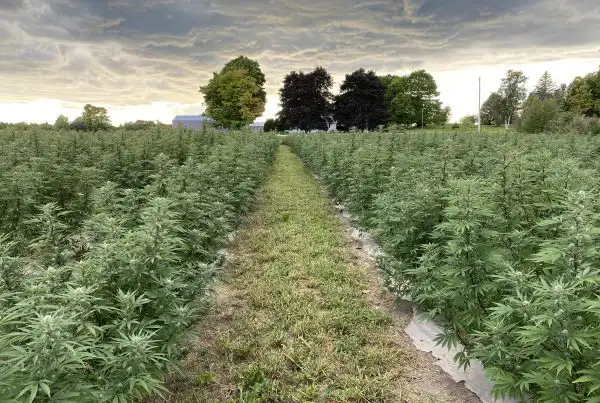
Door County Cannabis Co. grew from Gray-Aire Farms and our experience working directly with hemp in Door County, Wisconsin. Since 2019, we have watched CBD move from an unfamiliar cannabinoid to one of the most recognizable parts of the hemp industry.
Through that change, our approach has remained straightforward: make products we can stand behind, use third-party laboratory testing, and give customers useful information without pretending hemp is something it is not.
Sources & Further Reading
- U.S. Food and Drug Administration. What You Need to Know About Products Containing Cannabis or Cannabis-Derived Compounds, Including CBD. View FDA consumer guidance .
- U.S. Food and Drug Administration. What the FDA Is Doing to Protect Consumers from Cannabidiol (CBD) in Foods. View FDA CBD information .
- U.S. Food and Drug Administration. FDA Regulation of Cannabis and Cannabis-Derived Products, Including Cannabidiol (CBD). View FDA regulatory guidance .
- Peng J, Fan M, An C, Ni F, Huang W, Luo J. A narrative review of molecular mechanism and therapeutic effect of cannabidiol (CBD). Basic & Clinical Pharmacology & Toxicology. 2022;130(4):439–456. View study .
- Molecular and Cellular Mechanisms of Action of Cannabidiol. International Journal of Molecular Sciences. 2023. View review .
- U.S. Food and Drug Administration. What You Should Know About Using Cannabis, Including CBD, When Pregnant or Breastfeeding. View FDA guidance .
- U.S. Congress. Public Law 119-37, Section 781 — Amendments to the Federal Definition of Hemp. View enacted legislation .
This article is for general educational purposes and is not medical or legal advice. Research involving CBD continues to develop, and federal, state, and local requirements for hemp-derived products can change. Talk with a qualified healthcare professional about questions involving medications, medical conditions, pregnancy, breastfeeding, or other individual health considerations.